We process your personal information to measure and improve our sites and service, to assist our marketing campaigns and to provide personalized content and advertising. By clicking the button on the right, you can exercise your privacy rights. For more information see our privacy notice.
Privacy Policy

Top 4 Best Book Binding Options
May 23, 2018
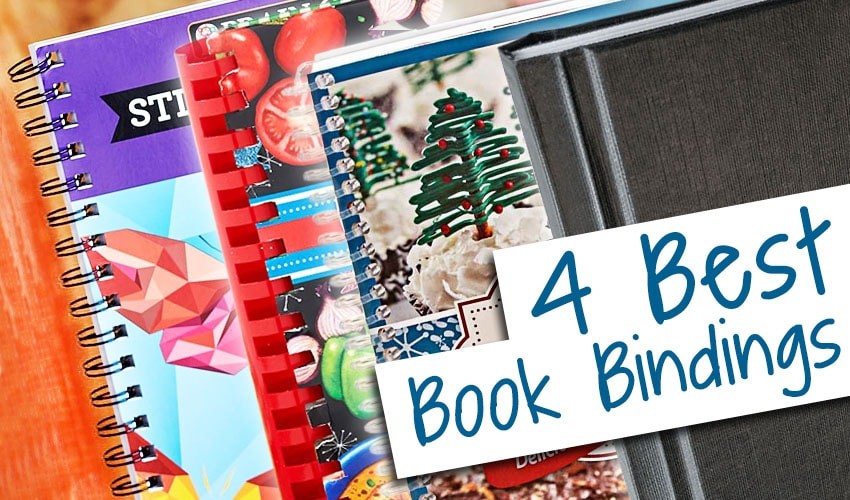
If you're getting ready to print a document, report, proposal, or other book, but you're not sure which binding method you want to use yet, check out the Binding101 top 4 best book binding options below. These document binding spines were chosen as the best of the best because of their popularity, durability, professional finish, and ease-of-use.
SPIRAL BINDING
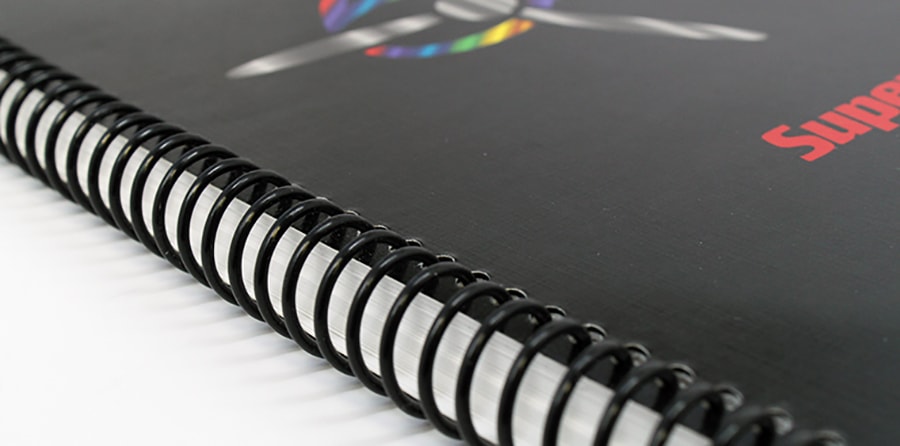
Spiral binding is probably the first thing you think about when you picture a document binding spine. They are typically made in either a metal or a plastic spiral coil that wraps through many holes along a binding edge. The coil spine resembles a phone cord, and is made of 1 solid piece of material that loops around over and over, usually with 43-44 loops for a standard letter size 4:1 pitch bound document (depending on the margin you use).
Metal spirals are typically not manufactured in the USA. Because they are pretty easily damaged, they have been mostly phased out. The plastic spiral bindings, however, are incredibly durable and bounce back, even when bent hard, unlike wire spirals.
| PROS: | CONS: |
SPIRAL BINDING TIP: If your book is between sizes, it is better to go with the larger size. If the coils are too tight,
they can make it quite difficult to turn the pages, and the pages will tear at the holes more easily.
TWIN LOOP WIRE BINDING

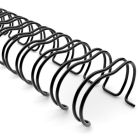
Twin loop wire binding features a strip of (yep, you guessed it) twin loops. These double loop wires look great once bound, creating a really clean and professionally finished bound document.
They come in 3 different hole spacing options (called pitch). 3:1 Wire-O, 2:1 Wire-O, or Comb Spiral-O. 3:1 and 2:1 Wire-O are the most common, and are the punch patterns used with most standard wire binding machines. The Spiral-O is specially made to fit in the plastic comb punch pattern and is meant for those who have a comb punch but want to elevate their document binding with a wire instead of plastic.
| PROS: | CONS: |
WIRE BINDING TIP: Be sure you have a wire closer that has adjustable settings for the wire size. Without this,
your wire may not close properly. Here are some wire troubleshooting tips to keep in mind when binding with double loop wires.
THERMAL BINDING

Thermal binding is growing more and more popular for several reasons. For one, it offers the capability to make both hard and soft cover books that look incredibly professional, and much more expensive than they are. They are also incredibly fast, as they are not punch-and-bind machines; instead, they use heat and a specialty binding glue that is pre-applied to thermal binding covers. This also makes them the easiest way to bind documents, as you just place your pages into the cover, and place the cover onto the heat plate on your machine.
There are two popular brands of thermal binding machines: Coverbind and Unibind. We highly recommend Coverbind as it offers the only automated thermal binding machines on the market, which makes it perfect for businesses who bind often and need speed and efficiency. Both work with their respective covers and hey have a wide variety of different cover options to choose from.
| PROS: | CONS: |
THERMAL BINDING TIP: Often times, thermal bound covers can be edited a couple of times. This means you can
fix a mis-print without wasting the cover. When you use a thinner stack of pages in a thicker spine, this has more extra adhesive,
so can be edited more than a thinner/tighter bound book. Note that not all covers can be edited.
PLASTIC COMB BINDING

You may be surprised to see plastic comb binding on this list, but the reality of the document binding industry is that comb binding is incredibly popular. So it has to be one of the best ways to bind books! The plastic binding spines are incredibly affordable, and their ability to bind huge books up to 2" makes them ideal for thick document binding needs, such as detailed businesses proposals.
| PROS: | CONS: |
COMB BINDING TIP: Consider customizing your comb spine with the title of the book, or your company name and phone number.
So, have you figured out what kind of binding is best for you yet? If these 4 incredibly popular document binding options don't quite fit your needs, be sure to check out the large variety of other book binding methods available here. Or if you are still stuck, give us a call at (866) 537-2244 and we would be happy to help.


Hi! My name is Mallory and I have been in the industry since 2008. If you do the math, that is over 15 years. I have spent my time at Binding101 in many roles, including customer service, sales, e-commerce management, video production, and more! Because of this vast experience, I bring a truly expert touch to the content in our blog. widdling down complex topics to extract what our customers really want to know. As the Content and UX Manager, I act as a writer and editor for the majority of copy you will find here. When not at my computer, I love spending time binging stand-up comedy, baking, and cuddling up with my family and rescued cats and dogs...
Related Products

Comment(s)

Trending Now

How to Bind Paper
January 29, 2019
What are the Best Laminators for Foiling?
July 10, 2018
How to Make a Wire Calendar 3 Different Ways
September 04, 2018
Everything you need to know about Foiling (with FAQs)
June 22, 2018
