We process your personal information to measure and improve our sites and service, to assist our marketing campaigns and to provide personalized content and advertising. By clicking the button on the right, you can exercise your privacy rights. For more information see our privacy notice.
Privacy Policy


When is it time to replace a die?
November 12, 2018
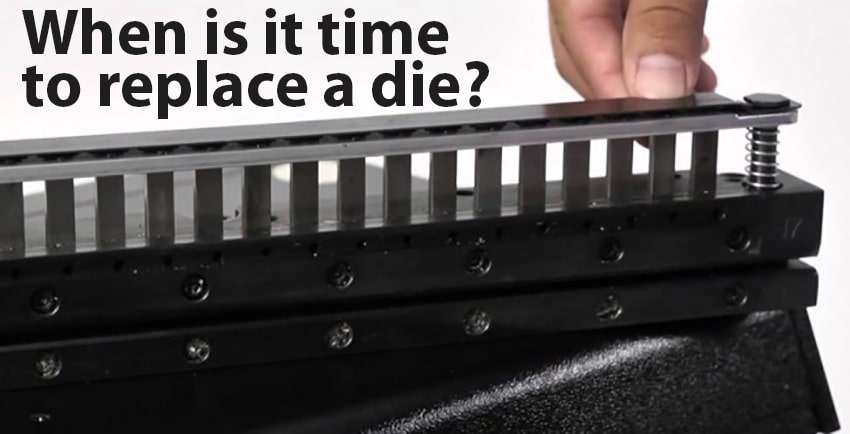
If you've been wondering how often you should be replacing your binding punch dies, you're not alone. There are a lot of variations that play into the actual life of a die, including frequency of use, length of these uses, capacities punched, the machine itself, how many times the pins have been sharpened, the kind of die punch pattern, and more.The truth is that it is impossible to say "you should change your die every X months/years" because it is impossible to put all of those factors together and apply it to all users and all machines. But there are some things to look for that will indicate it is time to replace your punching die, and in this article, we will discuss them.
Signs that your die is beginning to wear-out:
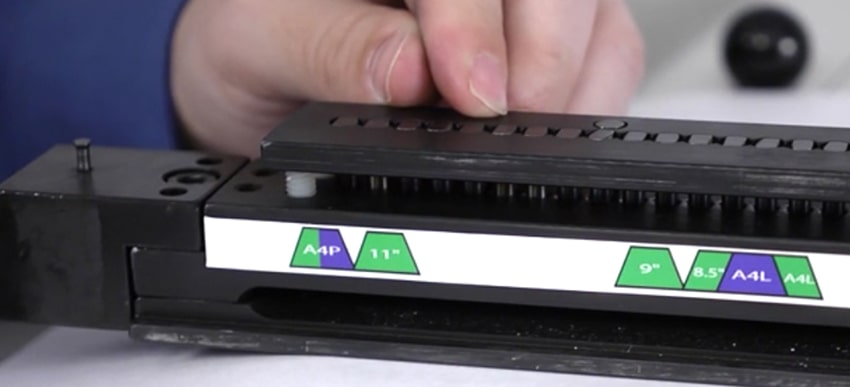
The punching pins within any kind of die are a wearable part; it is just the way it is. Your punching machine motor is designed to use the same amount of force to depress those pins into your stack of paper, whether the pins are sharp or dull. For that reason, you will begin to notice some changes in the punching performance, as well as the look of the finished pages.
- • Punching Performance - A decrease in punching performance includes several possible indications. The sound of the motor punching may be louder than normal, indicating that it is being stressed and working harder than it should. The response time for each punch may be slowed, as the dull pins do not punch pages as easily. The sheet capacity begins to decrease.
• Finished Look of Holes - A decrease in the quality of the finished punched holes is another indicator of a worn our punching die. The edges of the holes may be rough, or some pages at the bottom of your stack might not be punched all the way through.
When to fix it, and when to replace it:
A punching die has two basic components...the punching pins, and the die body that holds them. These pieces work in tandem, just like the two blades of a pair of scissors. And just like scissors, they will wear out eventually. What is great about binding punch dies is that you do not always have to replace the entire die; instead, you can actually sharpen or replace the punching pins, leaving the die body (which wears more slowly) in tact. Replacing individual pins can be a placeholder while you order your new die, as well as improve performance while you finish the active job. To truly return to the top-quality finish, you will need to replace the entire die, but the sharpening and replacing of pins is a great stepping stone to get you through the hustle.
But how do you know if you can sharpen the pins, or if you need to replace them? This will depend on the punch manufacturer and machine, as well as the actual materials that are used in the manufacturing of the die and pins. We offer an express die sharpening service for dies that qualify, and can always get you a replacement die when you are ready. Our die sharpening is less expensive than die replacement, and can help you achieve higher quality holes with less wear to your machine and motor.
How to extend the life of your binding punch dies:
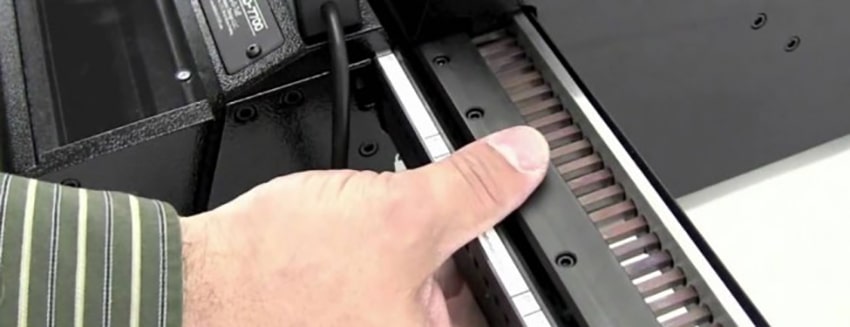
While no official or formal maintenance is typically required for punching dies, there are some tricks you can use to extend their lives and enhance the edges of those sharp dies.
- • Oil Your Die - Just as your car engine runs more smoothly with proper lubrication, so does a punching die. Using an oil lubricant to coat the punching pins prior to use will allow them to penetrate the pages more smoothly, and reduce wear to the motor, as well as help remove paper dust. Oiling is recommended in different frequencies for different dies; in general, square and rectangular dies should be oiled after every 8 hours of use, while round or oval dies can be oiled weekly. You should also oil the die before jobs after any long periods of inactivity. How do you oil a die? There are two ways. You can use a soft no-lint cloth with a 3-in-1 oil, wrap it around your finger, and wipe the oil along the exposed pins on both sides of the die. Or for a quick-oil solution, simply put some oil along a sheet of paper, and punch that page. No matter which way you oil, you should always punch scratch paper until there is no residue being left on the pages before you begin your job. And remember to check your machine user manual for proper procedures and handling.
• Quick Sharpening - One quick way to remove paper dust and sharpen the pins a bit is to punch a sheet of steel wool. This is not an official manufacturer-recommended trick, but something that users have shared with us as an on-demand solution to help with a job in-progress while they waited for their new die to arrive; it helped them keep things moving, so they could stay on-schedule for the job. It can be picked up at many hardware stores.
How long does a punching die last? When should I replace my die? Should I sharpen the punch pins, or replace it completely? This article should have answered all of your questions about the lifespan of your binding punch die. But if it didn't, give us a call at (866) 537-2244 or email us at solutions@buy101.com and we can help! Remember that the exact process for handling and caring for your die may vary depending on your manufacturer and machine. Whether you are using a James Burn punch, Rhin-O-Tuff, or any other binding punch machine, you should always check the user manual for instrictions and procedures prior to performing these tips..

In her free time, Mallory's favorite things to do include volunteering at the animal shelter bottle feeding neonatal kittens, reading at the park, and binge streaming TV shows with her 3 furbabies and family beside her.

Hi! My name is Mallory and I have been in the industry since 2008. If you do the math, that is over 15 years. I have spent my time at Binding101 in many roles, including customer service, sales, e-commerce management, video production, and more! Because of this vast experience, I bring a truly expert touch to the content in our blog. widdling down complex topics to extract what our customers really want to know. As the Content and UX Manager, I act as a writer and editor for the majority of copy you will find here. When not at my computer, I love spending time binging stand-up comedy, baking, and cuddling up with my family and rescued cats and dogs...
Related Products


Comment(s)




Trending Now

How to Bind Paper
January 29, 2019
What are the Best Laminators for Foiling?
July 10, 2018
How to Make a Wire Calendar 3 Different Ways
September 04, 2018
Everything you need to know about Foiling (with FAQs)
June 22, 2018
